
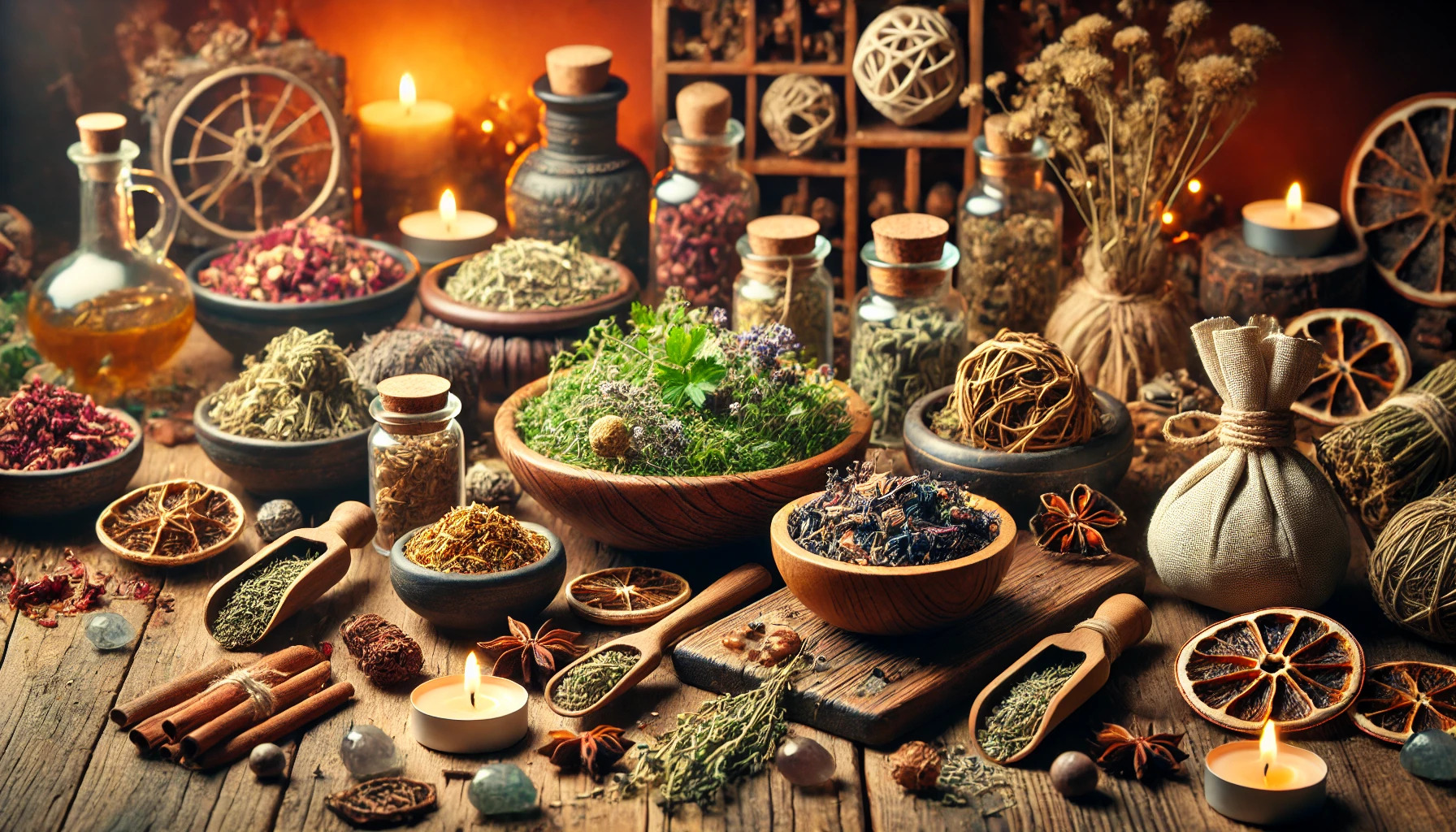
Explore 10 herbs and ingredients with symbolic meaning across Chinese traditions and Hoodoo/rootwork, and learn how they may be used respectfully in ritual, reflection, protection work, and spiritual self-care.

Before You Work With Herbs
Herbs carry meaning across many traditions. In Chinese culture, certain herbs and ingredients are connected with warmth, vitality, nourishment, protection, harmony, or longevity. In Hoodoo/rootwork, herbs may be used symbolically for cleansing, protection, luck, love, strength, influence, or spiritual support.
This guide is written for curious beginners. It focuses on symbolic and ritual use, not medical advice.
🔗Quick Link🔗
1. Ginger

Chinese Tradition: In Triditonal Chinese medicine, ginger is revered for its warming properties, used to invigorate the body’s yang energy, stimulate circulation, and expel cold from the body.
- Hoodoo Tradition: In Hoodoo, ginger is often used in spells to speed things up. It’s a key ingredient in “fiery” spells aimed at igniting passion, speeding up luck, or gaining favor in legal matters.
- Usage:
2. Ginseng

Chinese Tradition: Ginseng, known as the “root of life,” is a staple in Triditonal Chinese medicine, used to boost energy, longevity, and overall vitality.
- Hoodoo Tradition: In Hoodoo, ginseng is associated with power and control, often used in spells to enhance one’s influence over others or to dominate situations.
- Usage:
3. Mugwort

Chinese Tradition: Mugwort is a key herb in moxibustion, a traditional Chinese therapy where mugwort is burned over acupuncture points to stimulate healing and balance.
- Hoodoo Tradition: In Hoodoo, mugwort is valued for its protective qualities and its ability to enhance psychic vision, often used in dream pillows or burned as incense.
- Usage:
4. Peony Root

Chinese Tradition: Peony root is a beloved herb in Triditonal Chinese medicine, used to nourish the blood, calm the liver, and ease menstrual disorders.
- Hoodoo Tradition: In Hoodoo, peony root is a powerful protection herb, often used to ward off evil spirits and bring peace to the home.
- Usage: Place peony root near doorways or windows for protection, or include it in charms to maintain peace and harmony in the household.
5. Angelica Root

Chinese Tradition: Known as “female ginseng,” Angelica root is essential in Triditonal Chinese medicine, particularly for women, as it helps to nourish the blood and regulate the menstrual cycle.
- Hoodoo Tradition: In Hoodoo, Angelica root is associated with protection, healing, and the calling of spirits. It’s often used in spells for women’s health or to invoke divine intervention.
- Usage: Carry a piece of Angelica root in a mojo bag for protection, or use it in rituals aimed at improving health or invoking spiritual guidance.
6. Licorice Root

Chinese Tradition: Licorice root is a harmonizer in Chinese herbal formulas, used to detoxify the body, soothe the throat, and balance other herbs.
- Hoodoo Tradition: In Hoodoo, licorice root is used to influence and control others, particularly in situations involving relationships and authority.
- Usage: Use licorice root in spells where control or influence is needed, especially in matters of love or authority. It can be chewed, burned, or carried in a charm.
7. Cinnamon

Chinese Tradition: Cinnamon is a warming herb in Triditonal Chinese medicine, used to boost yang energy, improve digestion, and invigorate the circulation.
- Hoodoo Tradition: In Hoodoo, cinnamon is a powerful herb for drawing money, luck, and love. It’s commonly used in prosperity spells and to increase the speed of manifesting desires.
- Usage: Sprinkle cinnamon (ground) in your wallet to attract money, burn it as incense for love spells, or add it to food for a magical boost.
8. Lotus Seed

Chinese Tradition: Lotus seeds are highly regarded in Chinese culture, symbolizing purity, enlightenment, and spiritual growth. They are used in food, medicine, and spiritual rituals.
- Hoodoo Tradition: While not as common in traditional Hoodoo, lotus seeds can be incorporated into spells and rituals that focus on spiritual growth, protection, and harmony.
- Usage:
9. Chinese Five-Spice Powder

Chinese Tradition: Five-spice powder is a blend of five key spices (usually star anise, cloves, Chinese cinnamon, Sichuan pepper, and fennel) representing the five elements in Chinese philosophy.
- Hoodoo Tradition: In Hoodoo, the concept of balancing elements can be aligned with the use of five-spice powder in rituals aimed at achieving balance, harmony, and protection.
- Usage: Incorporate five-spice powder into meals as a way to balance the elements within
10. Reishi Mushroom

Chinese Tradition: Reishi, also known as Lingzhi, is one of the most revered mushrooms in Triditonal Chinese medicine, celebrated for its ability to enhance longevity, boost the immune system, and promote calm.
- Hoodoo Tradition: In Hoodoo, reishi is less common but can be incorporated into healing spells, particularly those focusing on longevity and spiritual protection.
- Usage:

Sign up our newsletter and get a FREE* Divination
Merging Eastern Mysticism & Western Witchcraft for a Harmonious Spiritual Journey. ✨ Explore Your Magic with Us
10 Must-Have Witchcraft Herbs in Chinese and Hoodoo Traditions FAQs
1. Can I combine these herbs in one spell?
- Yes, but keep it simple. Choose one clear intention and two or three symbolic ingredients at most. More ingredients do not always mean stronger energy.
2. Where can I buy these herbs?
- You can find many herbs through Asian grocery stores, herbal shops, health food stores, spiritual supply shops, or online marketplaces. Buy from sources you trust and check quality, safety, and intended use.
3. How do I choose which herb to use?
- Start with your intention. Are you working with protection, clarity, warmth, release, love, prosperity, or grounding? Choose the herb whose symbolism matches the energy you want to focus on.
4. Are there any safety concerns when using these herbs?
- Yes. Herbs can affect allergies, skin, pets, pregnancy, medication, and existing health conditions. Do not ingest, burn, inhale, or apply herbs/oils unless you know they are safe for your situation. For medical use, speak with a qualified healthcare professional.
5. Can I grow these herbs at home?
- Yes, several of these herbs, such as ginger and mugwort, can be grown at home with the right conditions. Growing your own herbs can also enhance the personal energy in your spells.
6. How do I store these herbs?
- Store dried herbs in a cool, dark place, preferably in airtight containers. Fresh herbs should be used promptly or dried for long-term storage. Keep ritual herbs separate from cooking herbs.
Safety note: Do not ingest, burn, inhale, or apply herbs or oils to the body unless you know they are safe for you. Some herbs may interact with medication, pregnancy, allergies, pets, or existing health conditions. For medical use, speak with a qualified healthcare professional.